How Casino Imagery Turns Chance into a Story
Casino imagery in Bình Chánh stories can make chance feel social, tense or ordinary; learn to read its objects, gestures and setting without inventing local facts.
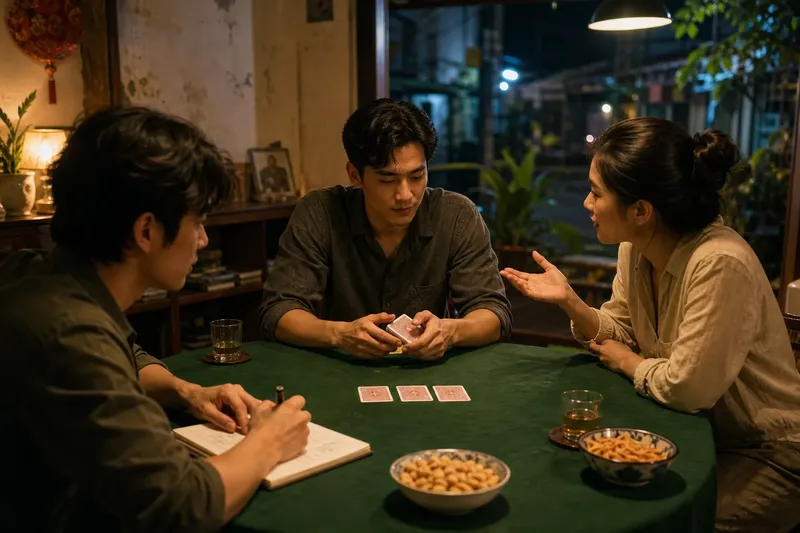
A green table, a fan of cards and a player holding still can make a scene feel charged before anyone speaks. Casino imagery in Bình Chánh stories works through such details: it gives chance a visible shape, while the surrounding room tells readers what kind of social world they have entered.
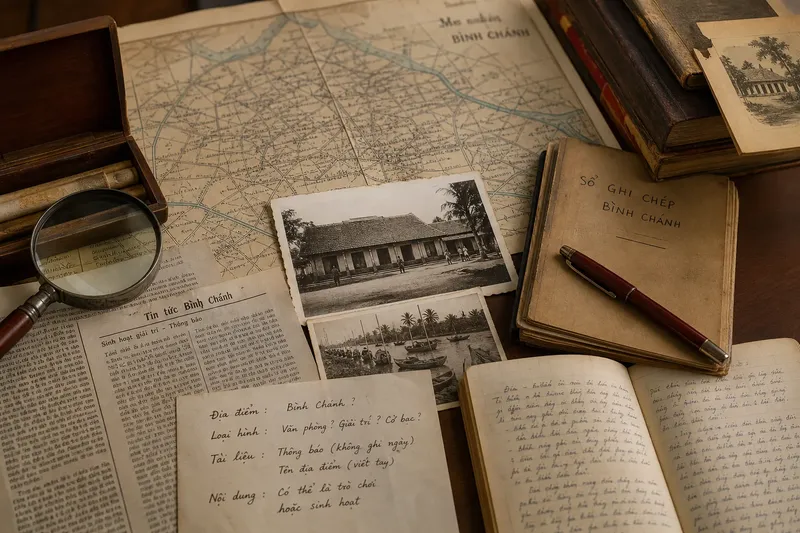
That distinction matters in writing about a place whose documented gaming venues should not be assumed. Images can evoke a casino culture without claiming that a particular establishment exists in Bình Chánh or offers a particular activity. The craft lies in showing what the scene means, not borrowing local credibility from a familiar prop.
How does casino imagery make chance visible?
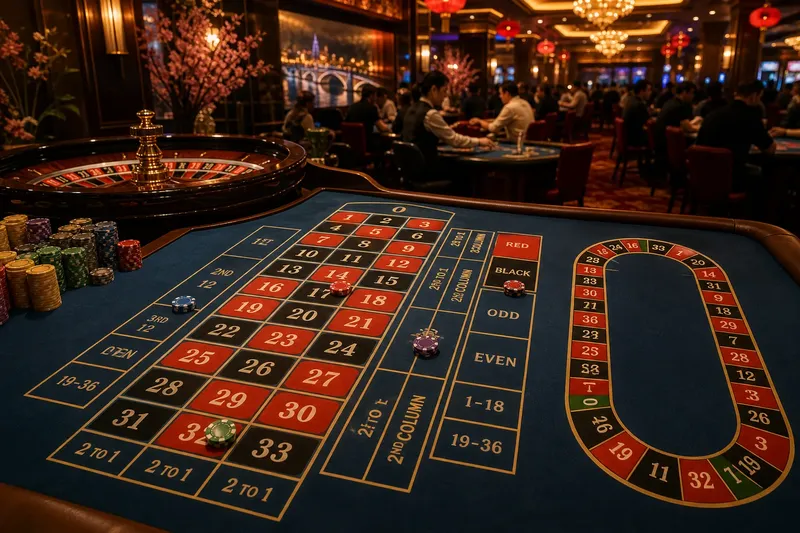
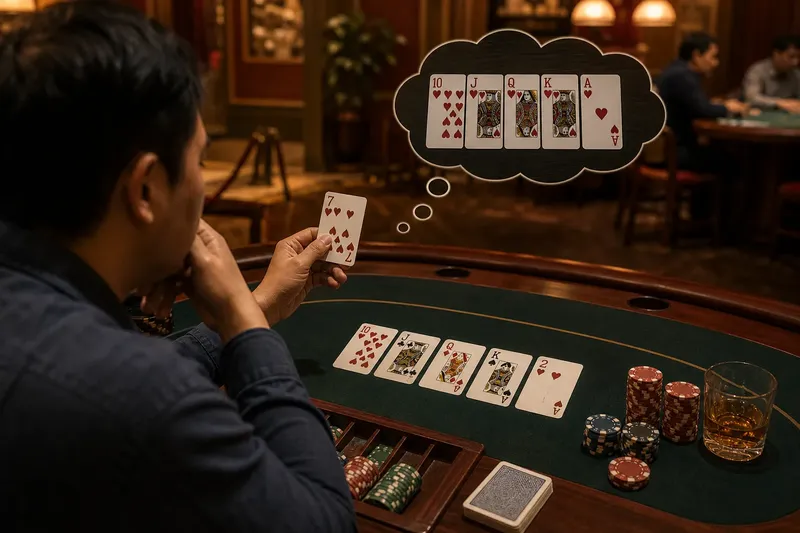
Chance itself has no appearance. Writers give it one through objects that imply uncertainty: shuffled cards, dice in a cup, a roulette wheel, a face-down tile. A single object can suggest a possible outcome; a hand hovering above it gives the moment its human pause.
The object also sets the scale of the scene. A solitary player and a quiet card game suggest private attention, while a crowded table can make the same uncertainty feel communal. Choose props according to the scene’s actual focus rather than treating every casino image as interchangeable decoration.
Which details make a scene feel social?
Look beyond the game. A chair pulled close, a bowl of snacks, someone keeping score, or a conversation that continues between turns can show how people share time around play. These details do not require the narrator to explain that the group is close; they let behaviour carry the relationship.
Sound can do similar work. Cards brushing the table, a brief burst of laughter, or a pause after a reveal gives the reader an impression of tempo. Avoid piling on every available noise: one well-chosen sound often says more than a roomful of generic excitement.
What should an image suggest—and what should it leave open?
A visual detail can carry mood without establishing facts about a real venue. A fictional neon sign may signal spectacle; worn cards may suggest repeated use; a quiet corner may imply concentration. None establishes an operator, legal status, or the facilities of a real Bình Chánh business.
Use this editorial check when choosing details:
- Game object: if the scene names a particular game, show an object or action that belongs to it; if the rules are unknown, use a general detail such as a shuffled deck rather than inventing a procedure.
- People at play: if the scene centres on a group, include an observable exchange such as passing cards or keeping score; if no relationship is established, do not call the players friends or family.
- Room atmosphere: if the scene is loud, use a concrete sound or interruption; if the room’s character is unknown, avoid assigning it luxury, secrecy or bustle.
- Local setting: if a place is documented, use only details supported by reliable local information; if it is not, mark the setting as imagined or keep the location general.
- Money or stakes: if the story establishes a wager, state only what the scene supports; if the amount or terms are unknown, do not imply them through extravagant gestures.
- Symbolic object: if a card or token has a clear role in the scene, let it recur with a changed meaning; if it is merely decorative, remove it rather than asking it to perform a second job.
Say you are writing an invented scene set in a Bình Chánh neighbourhood. The starting details are three characters, a deck of cards, two bowls of snacks and one unfinished conversation; there is no named venue, money wager or membership arrangement. You place the cards between the characters, let one player pause before dealing, and have another resume the conversation while the third keeps score. The observable result is a scene about shared attention and hesitation, not a claim about a real casino or local business. Because no wager is part of the starting material, the scene stays focused on social tension rather than financial stakes.
Why do cards, dice and lights carry different meanings?
Cards invite close attention to hands and faces. Their hidden information makes concealment easy to stage: a player can hold a card close, hesitate over a choice, or watch another person’s reaction. Dice make the decisive moment more physical, because the throw is visible and the result arrives in the open.
Bright lights and polished surfaces signal a different kind of spectacle. They can suggest performance or abundance, but they also risk making every scene look like a generic film set. A restrained detail—a reflection on a glass, a sign partly obscured by rain—can establish visual texture without claiming that a local venue has those features.
What do readers ask about casino imagery?
How can a writer show suspense without naming it?
Give a character a visible action that delays the outcome: a hand resting beside the cards, a glance exchanged before the reveal, or a pause in conversation. The suspense comes from what the reader can see and does not yet know.
Can casino imagery appear without a casino setting?
Yes. Cards, dice or the language of a wager can appear in a home game, a fictional scene or a metaphor. Make the setting clear so readers do not mistake an image for a claim about a real venue.
How can a writer make a Bình Chánh scene feel local?
Use specific local details only when they are known and relevant, such as a documented place name or a clearly established setting. If those details are unavailable, identify the scene as imagined and build its character through people, objects and conversation instead.
When does a symbol become too obvious?
If a card, dice roll or flashing sign repeats the same idea without changing the scene, it has become an explanation in costume. Keep it only when its meaning shifts—for instance, from a game object to a reminder of a character’s unresolved choice.
How can a writer avoid turning atmosphere into a claim?
Separate the fictional image from local description. A story may invent a card room in Bình Chánh, but a report about a real place needs reliable support for its name, activities and other details. Where legal classification matters, consult an appropriately qualified professional rather than treating an evocative label as evidence.
What is not worth the effort is adding a catalogue of chips, chandeliers, drinks and dramatic faces simply to make a scene read as “casino-like”. Choose the few details that reveal the social arrangement or the character’s uncertainty; leave the rest out.
Casino imagery in Bình Chánh writing is most useful when it lets a reader see how people respond to uncertainty, not when it pretends to document a venue. A card held back, a conversation carried on, or a score quietly kept can give chance a human scale without asking the image to prove more than it can.