Casino History in Bình Chánh: What Local Records Can Tell Us
Casino history in Bình Chánh is best read through local evidence: distinguish documented venues and activities from labels imported from elsewhere.
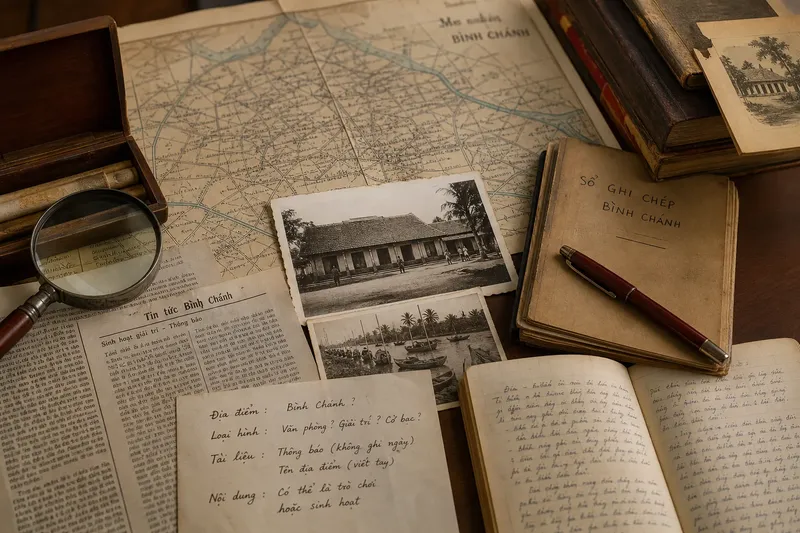
Casino history in Bình Chánh starts with a practical question: what do local records actually say about gambling, rather than what a familiar label suggests? A search for casino history in Bình Chánh should begin with the district’s own place names, documents and accounts, not a ready-made story about European gaming rooms.
What can local records establish?
Administrative records, local newspapers, maps, business notices and oral histories may each preserve different parts of a place’s past. A map can locate a building; a notice may describe its use; an interview can record a recollection. None should be made to answer questions beyond its scope.
For Bình Chánh, keep the geography precise. A reference to Ho Chi Minh City, a neighbouring district or a settlement with a similar name does not automatically describe a site within Bình Chánh. Check the place name against a period map or an identifiable local record before attaching it to the district.
How should you describe a venue when its purpose is unclear?
Use the most specific description supported by the source. If a document calls a building a meeting place, report that; if it names a game or gambling activity, say what it records. Avoid turning a vague label into a claim about a dedicated casino.
In Vietnam, relevant material may use Vietnamese terms for gaming, wagering, entertainment or a business, rather than the English word “casino”. Translation can help readers, but preserve the original wording where possible and explain when a translation is interpretive.
Which sources answer which questions?
Start with materials that can be checked: district histories, local newspapers, land or administrative records where accessible, maps and dated photographs with clear provenance. Libraries, local museums and relevant archival offices may help identify collections. A social-media post can suggest a lead, but it is not a substitute for the underlying record.
- If a record names Bình Chánh and gives a date, compare its place name with a map from the same period; if the location cannot be matched, describe the identification as uncertain and do not assign it to a specific site.
- If a newspaper calls a venue a casino, check the surrounding report for described activities; if it names games or wagering, report those details, but if it gives only the label, retain the uncertainty.
- If a photograph shows a sign or building, check its caption, date and source; if those details are missing, use it only as an unverified lead and do not present it as proof of a casino.
- If an interview recalls gambling at a named place, record who is speaking and when the account was given; if no independent record supports the memory, attribute it as recollection rather than established fact.
- If a document uses an unfamiliar Vietnamese term, consult a reliable dictionary or a qualified translator; if its meaning remains ambiguous, quote the original term and avoid a definitive English label.
- If two sources disagree about a venue’s purpose, compare their dates and proximity to the events; if neither resolves the conflict, state that the evidence differs instead of choosing the more dramatic account.
What questions should you ask about a Bình Chánh source?
Does a venue label prove that gambling took place?
No. A label identifies how a source names a place, not necessarily what happened there. Look for a description of games, wagering, rules or other activities before calling it a gambling venue.
How can I check whether a place was in Bình Chánh?
Compare the name and location with a map or administrative record from the relevant period. If boundaries or names changed, say so plainly and avoid treating a current map as a complete record of the past.
Can an oral history be used as evidence?
Yes, as a record of a person’s recollection, with the speaker and circumstances made clear. Where possible, compare it with dated documents or other independent accounts, without presenting a memory as a contemporaneous record.
Should an English translation replace the original Vietnamese term?
Not when the translation carries more certainty than the source. Give the original wording, explain the chosen translation and mark ambiguity rather than smoothing it away.
How does a careful source check change the wording?
Imagine a researcher has a photocopied notice from Bình Chánh with no date, a handwritten venue name and a line that could refer either to a game or to recreation. The researcher records the three starting details separately, checks the name against a period map, and asks a Vietnamese-language specialist to interpret the disputed line. If the map does not locate the venue and the wording remains ambiguous, the resulting description is “an undated notice referring to a local recreational venue”; it does not claim that gambling occurred. If the map identifies the site but the activity is still unclear, the location can be stated while the purpose remains qualified.
It is not worth the effort to make a thin source sound conclusive by adding a grand history around it. A short, accurately bounded description is more useful than a confident claim built from a suggestive name.
What can a local account responsibly conclude?
A well-supported account can identify a place, date a source and describe the activity that source documents. It can also distinguish direct records from later recollections and translations. Where evidence is missing, saying so is part of the history, not a failure to finish it.
Casino history in Bình Chánh becomes clearer when each claim stays attached to its source: name the location as precisely as the record allows, preserve uncertain wording, and distinguish a documented gambling activity from a venue label alone. That discipline leaves room for local history without borrowing conclusions from elsewhere.