The Casino Scene That Sets a Film’s Mood
Shape a casino scene’s mood with sound, framing and pacing, so viewers understand what the character wants before the game begins.
How can a casino scene in Bình Chánh feel rooted in its setting before anyone plays? Start with a character’s immediate aim and the particular social space around them, then let sound, framing and pace reveal the pressure. A room is not local merely because the script gives it a local address.
For a scene set in Bình Chánh, the district should shape what happens on screen rather than sit behind it as scenery. Its exact location and details need to be established with local knowledge and production checks; invented specifics dressed as observation will only make the scene less convincing.
What makes the setting matter to the scene?
Write the pressure as an observable task. “Mara wants her former colleague to notice her, but cannot decide whether to approach” gives performers and crew something to stage. “The casino is exciting” gives them a mood board and, eventually, an alarming quantity of shiny surfaces.
Choose one main impression and one counterpoint. The room might seem orderly while overlapping voices make it feel socially unsettled. Or the space may be busy until the composition isolates someone listening for a familiar voice.
Then decide what the character wants during this stretch of the story. A regular visitor, a first-time guest and someone making a deliberate public appearance would notice different things. For a Bình Chánh setting, decide which parts of the character’s routine, relationships or route through the district actually affect this moment. Do not use local labels as a substitute for those choices.
How do you plan the scene’s beats?
Break the action into beats that change what the audience knows or expects. Arrival, attempted composure, interruption, a choice to approach and a delay before speaking might form a useful sequence. Each beat needs a reason for the sound, framing or pace to shift.
For each beat, check the visible action and follow the decision that its result calls for:
- Arrival: Check what the character notices first; if it reveals their immediate concern, keep it in focus, otherwise choose a more telling detail.
- Composure: Check the gesture they use to appear settled; if it reads clearly on screen, retain it, otherwise replace it with a simpler action.
- Interruption: Check which sound or movement breaks their attention; if it changes their behaviour, bring it forward, otherwise leave it in the room’s background.
- Choice: Check what draws them towards another person or place; if the motive is legible, stage the movement, otherwise clarify the blocking.
- Delay: Check what they postpone doing; if the pause changes expectation, hold it, otherwise shorten it.
- First game action: Check what the audience must understand beforehand; if the action adds a new pressure, show it, otherwise continue without it.
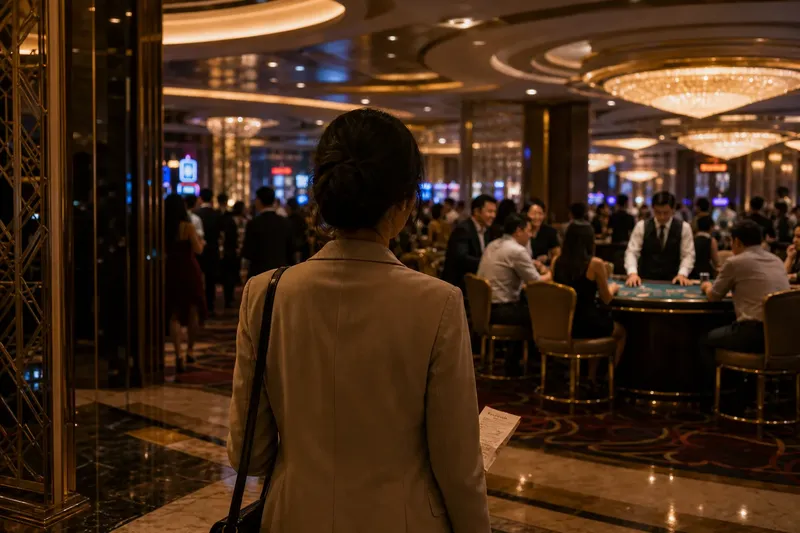
Say you are writing an invented scene set in a fictional casino in Bình Chánh. Mara has a creased invitation and wants her former colleague to notice her, but she is reluctant to meet their eyes. She enters, smooths her jacket, hears a laugh from the colleague’s direction and crosses towards the table without looking over. The camera stays behind her until she stops. The result is visible: her wish to be noticed sits beside her reluctance to make eye contact. If a local detail is added, it should come from an agreed, verified production choice, not guesswork.
Which sounds should carry the pressure?
Build a short sound hierarchy: foreground, background and details that become audible at a particular beat. Possible materials include shoes on hard flooring, ventilation, conversation, a chair moving, music, a dealer’s voice or an announcement. Choose only what belongs to the agreed fictional setting and serves the scene’s point of view.
Give each layer a job. Room tone can establish activity; a distinct voice can make the space feel socially demanding; a reduction in background sound can narrow attention without a musical warning flare. If a sound attracts the audience, decide whether the character hears it too. Otherwise the soundtrack has developed an opinion the scene may not share.
Music can suggest period or emotional temperature, but a familiar cue may announce an emotion the performance has not earned. A character who speaks over the room, strains to hear or pauses when one voice carries already gives the audience something to interpret.
What should the camera reveal about the place?
Choose the opening image according to the character’s position in the scene. A wide view can make them seem small or show that they know where they are going. A close view can withhold context, making a composed expression feel less secure once the frame opens. Neither choice has a fixed meaning; performance and context decide.
Show enough of the fictional casino for the audience to understand the immediate choices. A clear view of doors, tables and circulation can make movement legible. Partial views through people, reflections or architectural edges can limit information, but a reflection is not automatically profound. It remains a reflection, with a lighting bill.
To connect the scene to Bình Chánh, use details that have been confirmed for the production and that affect the action: a route the character knows, a relationship that changes their behaviour, or a specific feature of the chosen setting. The film need not turn the district into a guided tour. If the location is invented, make that clear in the production’s framing rather than borrowing real-world authority it has not earned.
Set a rule for camera movement. It might stay still while a character maintains a public face, follow only when they commit to crossing the floor, or hold back until they enter a more exposed part of the frame. A consistent rule gives a later change weight; constant gliding spends that emphasis early.
How should editing change the pace?
Decide how long the audience can observe the character before the scene asks for action. A quick cut from entrance to table may suggest familiarity or impatience. A longer hold can reveal a glance, a stopped hand or a smile that arrives late.
Let shot length respond to intention. Hold when the character is concealing something or waiting for another person; cut sooner when attention is pulled elsewhere. The audience can feel control shift without being asked to admire the editing.
Use pauses as active moments. If a character waits for a gap in conversation, the delay should change what the audience expects or show a choice being avoided. If it does neither, shorten it. Atmosphere is not a licence to keep every second the camera can legally occupy.
What is not worth the effort is adding a special sound, lens move or edit to every beat. Constant emphasis flattens the scene’s hierarchy, and the audience has limited patience for a film auditioning for its own trailer.
How can you check whether the choices work together?
Give sound, framing and pace a shared change point. If a character loses composure, the sound might sharpen, the framing become more restrictive and the edit hold longer than expected. They need not all change together; one shift can carry the moment if the others sustain the scene’s established rule.
Check whether intention and effect agree. A character meant to feel isolated may instead seem exhilarated if the camera moves energetically and the soundtrack swells. That contrast may be deliberate; if not, revise the element pulling the audience away from the intended pressure.
Review each layer separately, then together. Watch without sound to check whether blocking and framing communicate the character’s position. Listen without the image to see whether the audio has a clear point of view, then watch normally and note where attention shifts. For a scene claiming a connection to Bình Chánh, separately confirm that any local details are accurate and relevant; if they cannot be verified, remove or clearly fictionalise them.
What questions help shape a Bình Chánh casino scene?
Does the scene need to show a game immediately?
No. If the dramatic question concerns a character’s intention or an avoided choice, the scene can delay the game. Introduce it when it changes the action rather than treating it as an obligatory opening display.
How can a casino scene feel tense without ominous music?
Use a specific mismatch: a pause amid continuous conversation, a hesitant movement in a busy frame, or a response to a sound others ignore. Let performance and framing carry the tension, then add music only if it contributes a distinct effect.
How can the setting feel connected to Bình Chánh?
Let a verified, relevant detail affect what a character does, notices or avoids. If the production cannot confirm a detail, leave it out or make the setting explicitly fictional rather than presenting invention as local fact.
How do you keep the scene from becoming slow?
Make each held moment change what the audience expects or understands. If a pause brings no new information, pressure or decision, shorten it instead of decorating it with another shot.
What should be settled before filming?
Check these decisions before rehearsal and shooting; let each result determine what to retain or revise:
- Point of view: Check whether the audience should share the character’s attention; if yes, align sound and framing with it, otherwise keep a clear observing perspective.
- Sound priority: Check which voice, texture or silence matters at the entrance; if it directs attention usefully, foreground it, otherwise keep it in the general mix.
- Camera rule: Check when the camera stays, follows or withholds movement; if the rule supports the character’s change, keep it, otherwise simplify the movement.
- Social geometry: Check who can affect the character and what separates them; if the obstacle reads clearly, retain the blocking, otherwise reposition the people or objects.
- Rhythm change: Check which beat earns a longer hold or quicker cut; if the change adds pressure, keep it, otherwise return to the established pace.
- Local detail: Check whether a claimed Bình Chánh detail is verified and relevant to the action; if both are true, use it, otherwise remove it or identify the setting as fictional.
- First game action: Check what the audience needs to know before it happens; if the action adds a new dramatic question, include it, otherwise delay or omit it.
Confirm practical conditions with the venue and relevant production professionals. A location may restrict filming, access or visible details, so establish what can be staged before building the scene around it. For a constructed set, check which surfaces and sound sources are available; if they support the intended atmosphere, use them, otherwise adapt the sound and blocking plan.
When the scene’s first intention, sound priority and camera rule point towards the same dramatic pressure, keep the arrangement restrained. A casino scene in Bình Chánh becomes more convincing through relevant, verified choices than through a pile of local signifiers. The useful last check is whether the audience can read what the character wants before the game begins, while still wondering what they will do next.